


Overcoming the Fear of Takedowns in Jiu-Jitsu
Stepping onto the mats for the first time is brave. However, standing up and preparing to be thrown can be terrifying. The fear of falling is a natural human instinct. It is hardwired into our biology to protect us from injury. Therefore, feeling anxious about takedowns in Brazilian Jiu-Jitsu (BJJ) is completely normal. At Gracie Barra North Phoenix, we understand this fear intimately.
This comprehensive guide will help you navigate the mental and physical hurdles of takedowns. We will explore safety mechanics, progressive training, and mindset shifts. By the end, you will view being taken down as just another part of the gentle art.
Brazilian Jiu Jitsu in North Phoenix
The Foundation of Safety: Learning to Breakfall
Mastering Ukemi (Breakfalls)
The secret to losing the fear of falling is knowing how to land. In Judo and Jiu-Jitsu, we call this Ukemi. Before you learn how to throw, you must learn how to fall. This is the first lesson at our North Phoenix academy. You cannot get hurt if you know how to disperse the impact.
A proper breakfall distributes the force of the landing across a larger surface area. Instead of landing on a shoulder or wrist, you land on your side or back. You slap the mat with your arm to absorb shock. This technique transforms a painful crash into a controlled landing. Once you trust your breakfall, the fear diminishes significantly. You realize that the mat is soft and your technique protects you.
Protecting the Head and Limbs
The biggest danger in a fall is hitting your head. Therefore, the cardinal rule of breakfalls is to tuck your chin. Imagine holding a tennis ball between your chin and chest. This simple action keeps your head off the mats during a high-impact throw. It prevents whiplash and concussions effectively.
Additionally, you learn strictly never to post your arm. Instinct tells us to reach out to stop a fall. However, this is how wrists and elbows get injured. We drill the habit of keeping arms in or slapping the mat. Repetition overrides this dangerous instinct. Eventually, tucking and slapping becomes second nature. Knowing your vital areas are safe allows you to relax during the takedown.
A Progressive Approach to Training
Starting from the Knees
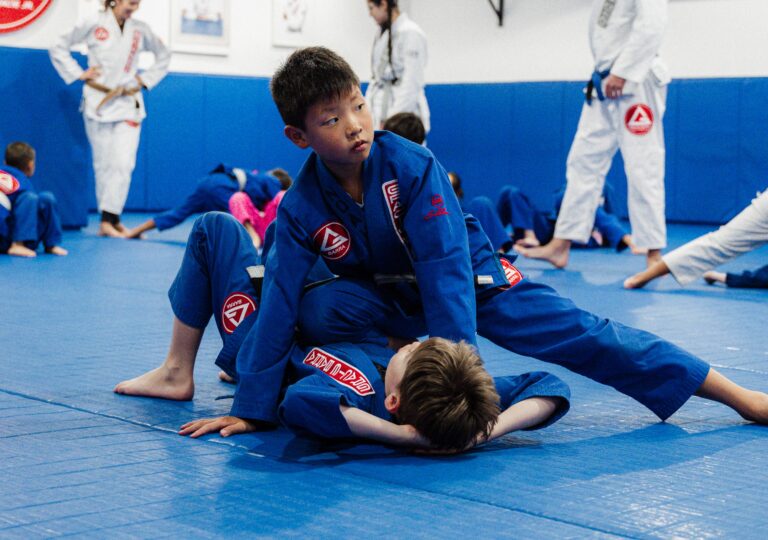
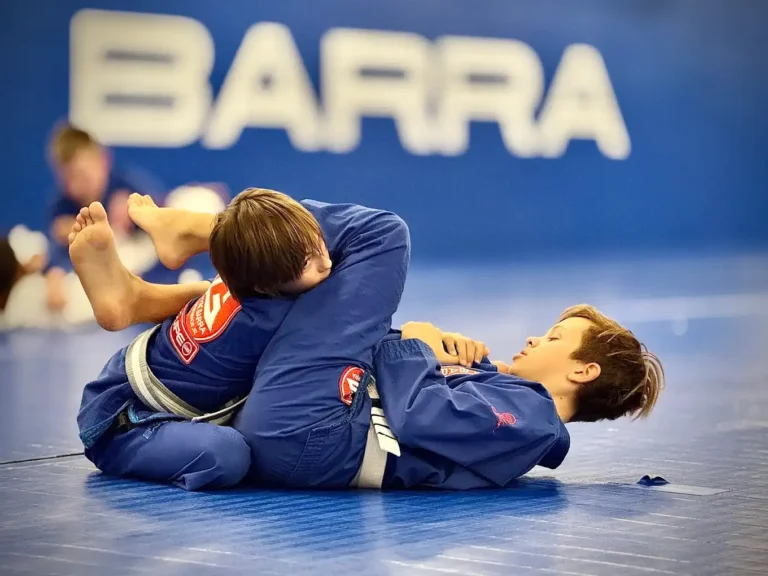
Nobody starts learning takedowns by being suplexed. That would be dangerous and counterproductive. Instead, we begin on the ground. Training from the knees lowers the center of gravity. The distance to the mat is minimal. Consequently, the impact is negligible.
This environment allows you to understand the mechanics of off-balancing an opponent. You learn how a takedown feels without the height. You can practice the roll and the landing safely. As you become comfortable here, your confidence grows. You begin to understand the physics of the movement without the fear of a hard slam.
Gradual Elevation and Drilling
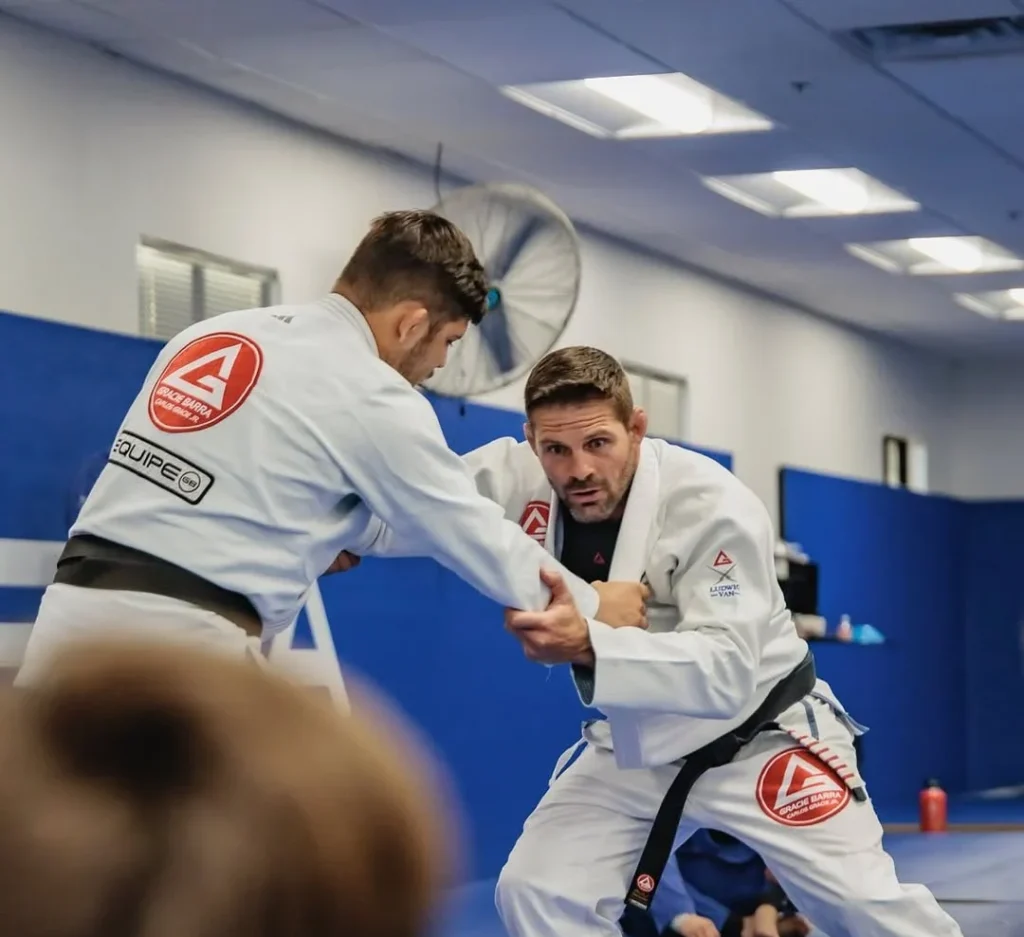
Once you master the mechanics low to the ground, we slowly stand up. However, we still do not go 100% intensity. We use “fit-ins” or Uchikomi. This involves entering the throw without finishing it. You feel the lift and the balance break, but you do not fall.
When we do practice the full throw, we use a “crash pad” or go very slowly. Your partner supports your weight on the way down. They hold your sleeve to ensure a soft landing. This graduated exposure therapy works wonders. You acclimate to the height and the sensation of falling bit by bit. At Gracie Barra North Phoenix, safety is always the priority over intensity.
The Role of Trust and Partnership
Relying on Your Training Partners
Jiu-Jitsu is not a solo sport. You need a partner to practice. The quality of your partner dictates your safety. In our academy, we foster a culture of mutual care. Your partner is lending you their body for you to learn. In return, you must protect them.
When practicing takedowns, the person executing the throw is responsible for the landing. They control the descent. Knowing that your teammate has your best interests at heart reduces anxiety. You trust that they will not slam you maliciously. This trust allows you to relax your body. A relaxed body absorbs impact much better than a tense one.
Communicating Your Comfort Level
Communication is key to overcoming fear. If you are nervous about being thrown, say so. There is no shame in admitting fear. A good partner will adjust their intensity. They might start with simpler trips instead of high-amplitude throws.
Instructors at our North Phoenix location encourage this dialogue. We want everyone to feel safe. If you have a prior injury or a specific phobia, let us know. We can modify the technique for you. Taking ownership of your training boundaries empowers you. It removes the uncertainty that fuels fear.
Mental Strategies for the Stand-Up Game
Reframing the Fall
Fear often stems from the unknown. We perceive a takedown as a failure or a disaster. However, in BJJ, the fight is not over when you hit the ground. Often, it has just begun. Reframing the fall as a transition rather than a defeat helps.
If you get taken down, you immediately look for a guard or a sweep. You keep moving. This mindset shift takes the pressure off the fall itself. It becomes just a mechanism to get the fight to the floor. You stop freezing up and start thinking about your next move. This proactive mental state overrides the reactive state of fear.
The Power of Relaxation
Tension is your enemy. When you are stiff, you fall like a tree. When you are relaxed, you fall like a cat. Stiff bodies break; relaxed bodies bounce. Anxiety causes us to tense up our shoulders and hold our breath.
We teach specific breathing exercises to combat this. Exhaling as you fall releases tension. Focusing on deep, rhythmic breaths keeps your heart rate down. Consciously relaxing your muscles makes the impact feel softer. It is a skill that takes time, but it transforms your takedown defense.
The Practical Benefits of Takedowns
Real-World Self-Defense
Street fights rarely start on the ground. They start standing. If you fear takedowns, you fear the engagement. Knowing how to take someone down—and how to land if they take you down—is vital.
A fight on concrete is different than on mats. However, the breakfall technique remains the same. It could save your life. Knowing you can handle a fall gives you a massive advantage. You remain calm while the attacker becomes chaotic. This confidence de-escalates situations before they turn physical.
Completing Your Jiu-Jitsu Game
To be a complete grappler, you must understand both phases of combat. Guard pulling is effective, but it is not always the answer. Sometimes you need to be on top. Takedowns award points in competition for a reason. They demonstrate control and dominance.
Embracing the stand-up game opens a new world of techniques. Judo and wrestling integrate beautifully with BJJ. You become a more dynamic and dangerous player. The satisfaction of executing a clean throw is unmatched. It is worth the effort to conquer the fear.
Start Your Fearless Journey Today
Fear is just an emotion. It does not define your potential. Countless students at our academy have faced this same fear and conquered it. They started with trembling knees and now execute beautiful throws. You can do the same.
Brazilian Jiu Jitsu in North Phoenix
The environment you train in makes all the difference. You need expert guidance, safe equipment, and supportive partners. You will find all of this at our facility. We are dedicated to helping you build a fearless mindset.
Don’t let fear hold you back from mastering the gentle art. Step onto the mats and face the challenge head-on.
Join us for a class and conquer your fears at Gracie Barra North Phoenix.